
A Hands-On Science Activity All About Adaptations
Discover How Birds Survive Winter Through Adaptations
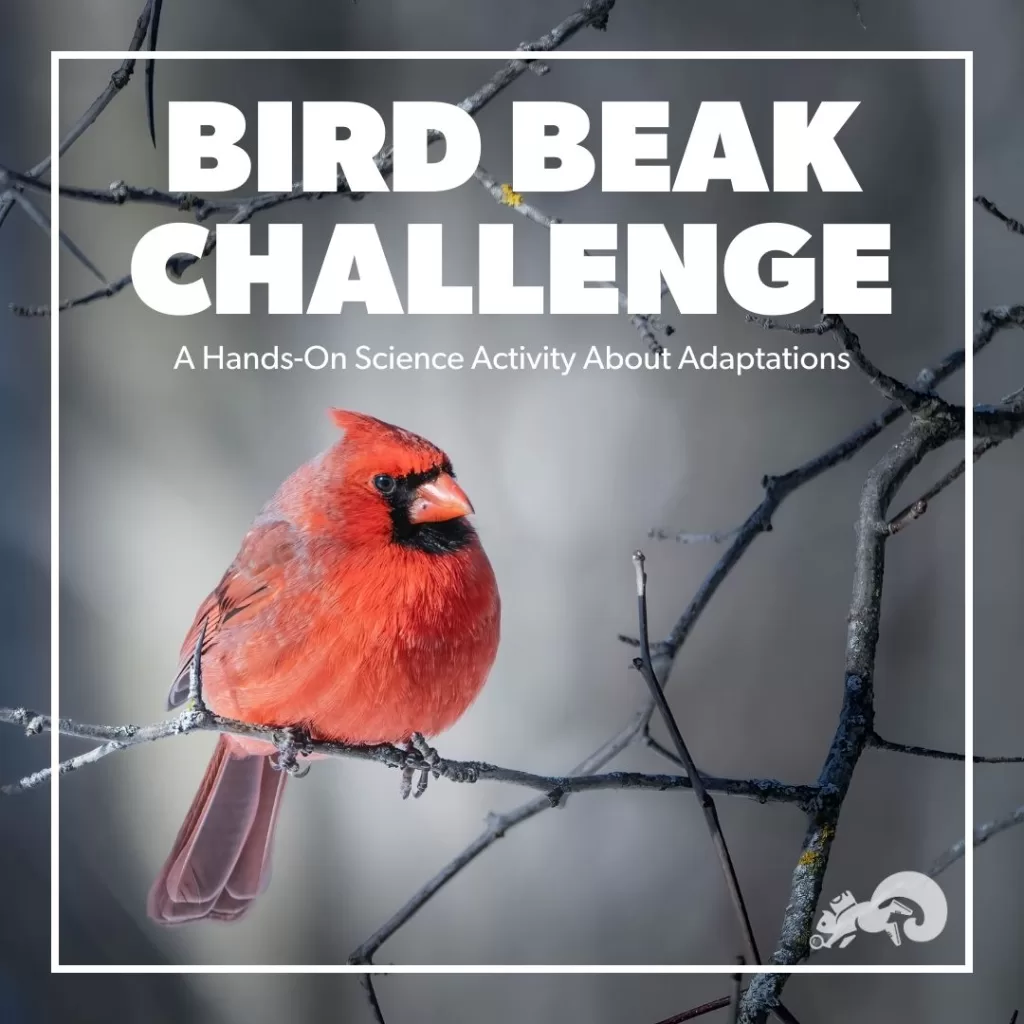
The Winter Bird Beak Challenge is an interactive science experiment that helps students understand how bird beaks are adapted for different food sources, especially during winter when resources are limited. This activity encourages critical thinking, problem-solving, and empathy for wildlife while keeping learners actively engaged.
It’s perfect for classrooms, homeschool groups, and families looking for meaningful winter science activities.
Learning Focus
- Animal adaptations
- Structure and function
- Seasonal survival strategies
- Engineering and problem-solving
Supplies
- Tweezers
- Clothespins
- Spoon
- Chopsticks
- Binder clip
- Small cup or bowl
- Dry beans, rice, raisins, or birdseed
- Stopwatch
Step-by-Step Instructions
- Spread a mixture of “food” items on a plate or tray.
- Assign each tool to represent a different type of bird beak. For example:
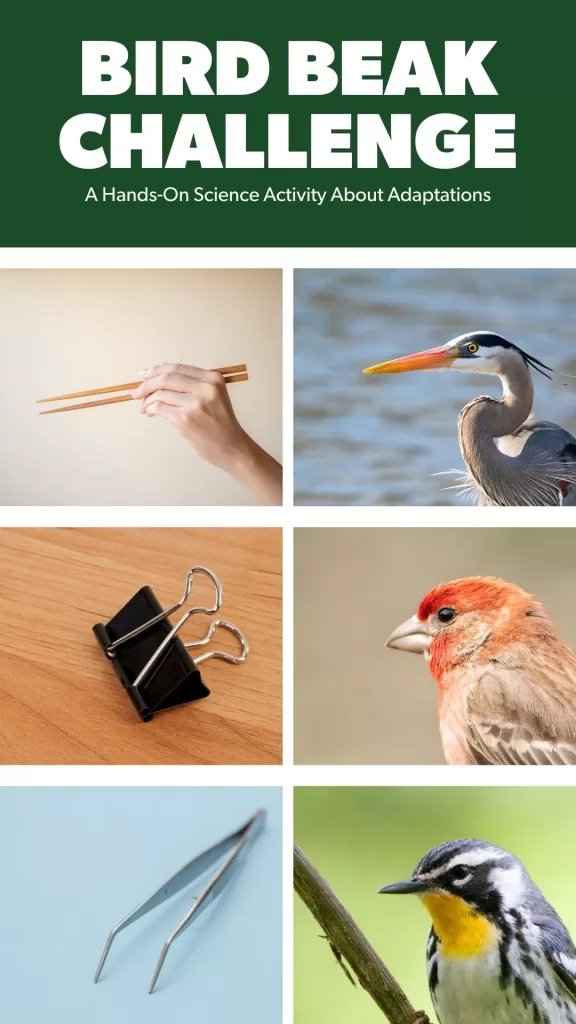
- Chopsticks represent a long, probing beak, good for spearing and grabbing prey. (ex: Heron)
- The binder clip represents a heavy, crushing beak designed to crack hard seeds and nuts. (ex: Finch)
- Tweezers represent a thin, pointed beak, ideal for picking up insects and small prey. (ex: Warbler)
- The spoon represents a broad, scooping beak designed to scoop and strain food from water or mud. (ex: Roseate Spoonbill)
- The clothespin represents a strong, grasping beak useful for cracking seeds and holding food. (ex: Cardinal)
- Choose one tool and give students 30 seconds to collect food into their cup.
- Count or measure the food collected.
- Repeat with different tools.
- Compare results and discuss which “beaks” worked best for which foods.
Make It a Winter Challenge
- Have students wear mittens to simulate cold conditions.
- Lightly cover food with bits of paper or cotton balls to represent snow.
- Discuss how winter limits food availability for birds.
Why This Experiment Works
Students see firsthand that no single adaptation works best in all situations. The activity reinforces the idea that animals are shaped by their environments. It also encourages students to think like scientists and engineers.
Share Your Results
We’d love to see your group using this activity! Tag us on social media using #muddysneakersnc.